Artemis 1: Technical SLS Audit and Mission Results Analysis
As an inaugural flight, the mission validated the propulsive dynamics of the RS-25 engines and precise insertion into DRO (Distant Retrograde Orbit). The definitive technical milestone was the atmospheric reentry at Mach 32, breaking records for distance and thermal resistance for human-rated spacecraft.
01 // Launch Vehicle: NASA's SLS Rocket
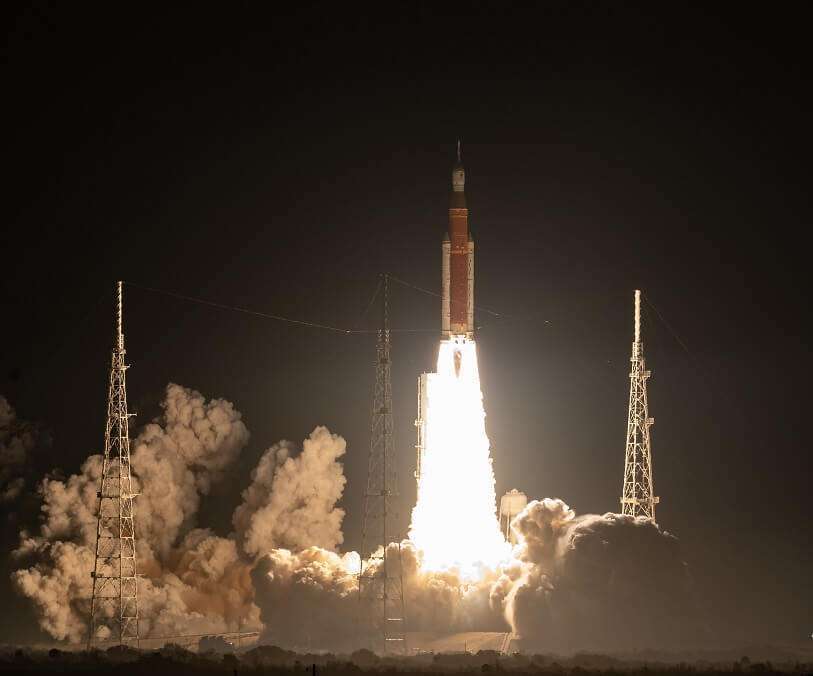
The SLS Block 1 demonstrated technical hegemony by generating 39.1 MN of peak thrust at liftoff, surpassing the Saturn V. This raw power precisely injected the Orion capsule into its Trans-Lunar Injection (TLI) trajectory.
Recommended Hardware // Technical Scale Models
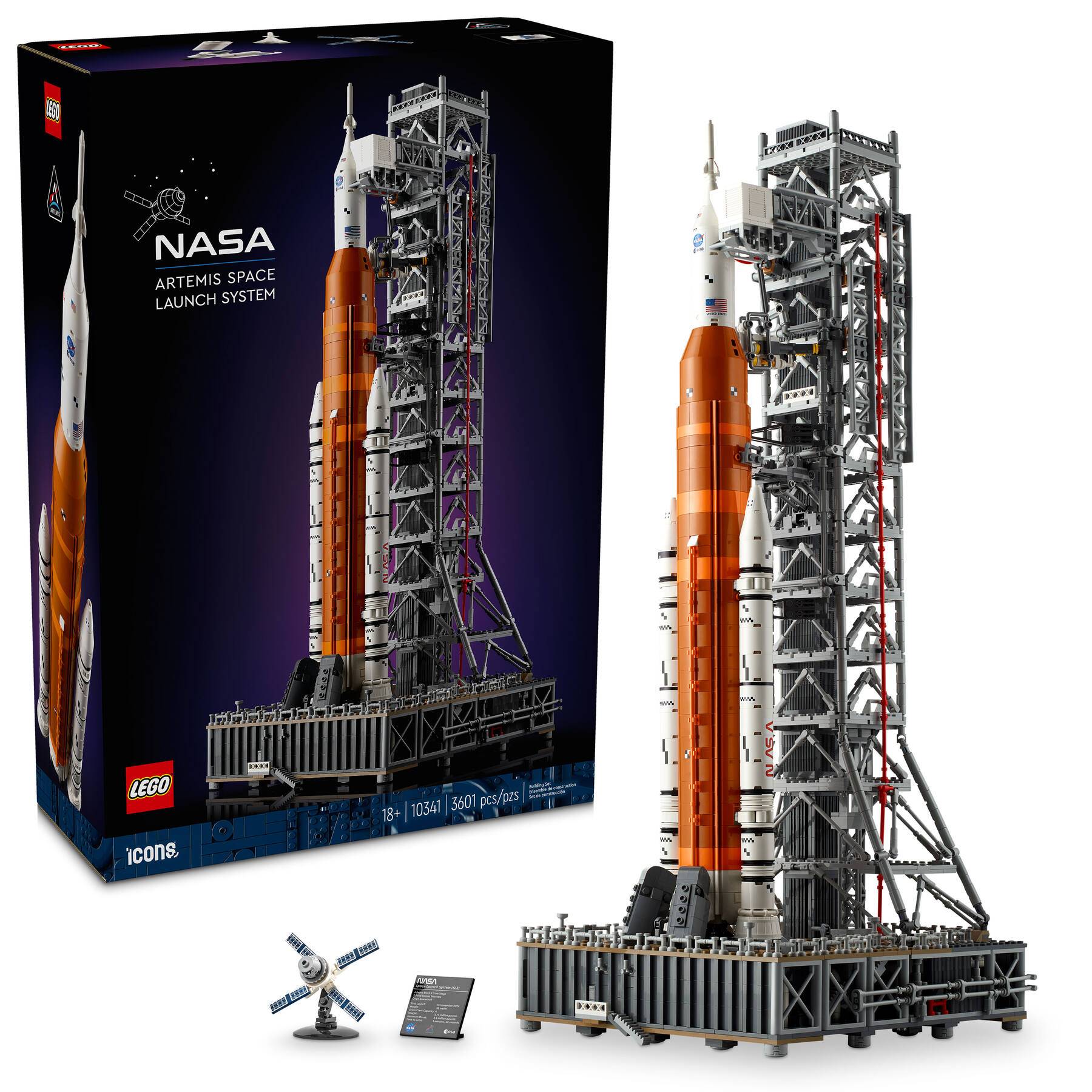
While a real SLS launch costs $4.1B, the LEGO Icons set allows for a tactical analysis of the RS-25 engines and Orion capsule at your own command center.
ACQUIRE HARDWARE →Following ascent, the ICPS stage executed the TLI maneuver. The adapter deployed 10 Artemis 1 CubeSats designed to map lunar hydrogen and study radiation outside the Van Allen belts.
02 // Orion Spacecraft Performance: Records and Objectives
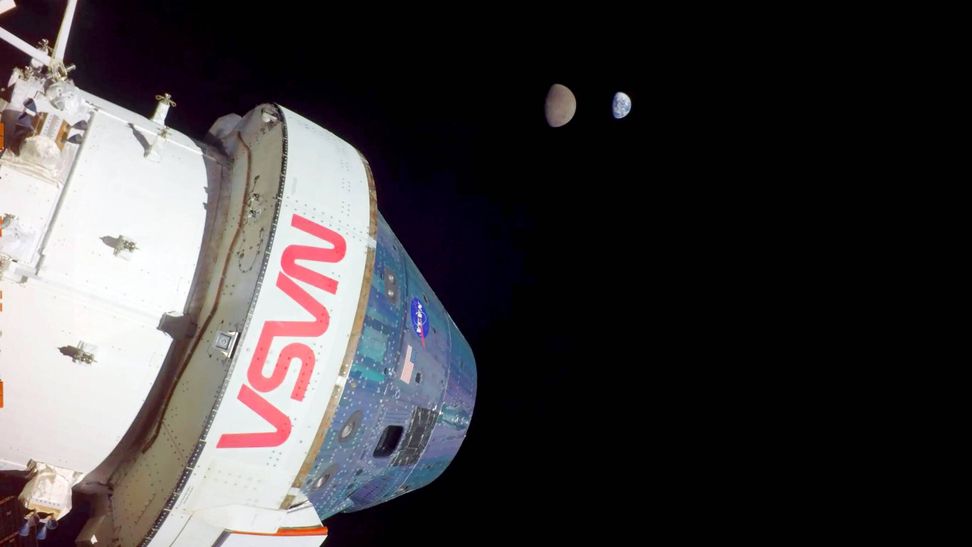
The spacecraft set a new distance record for human-rated ships, reaching 432,210 km from Earth in a Distant Retrograde Orbit (DRO).
- Biological Analogs: Mannequins Moonikin Campos, Helga, and Zohar recorded critical radiation data.
- Service Module (ESM): Manufactured by ESA/Airbus, providing a constant 11.2 kW of power.
AVCOAT Heat Shield Anomaly
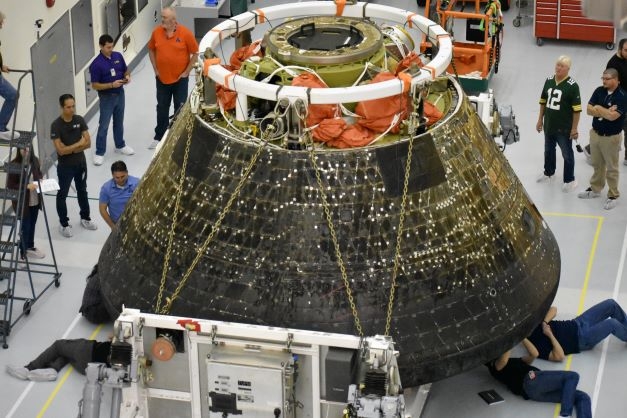
Post-flight analysis revealed charring liberation: fragments of the Avcoat material detached due to pressure buildup. This is the critical systems engineering point currently being redesigned for crewed missions.
03 // Industrial Audit: Propulsion Machining and Thermal Painting
The performance of the SLS Block 1 core stage during Artemis 1 validated the extreme tolerances of aerospace precision machining applied to the heritage RS-25D engines. Each unit, refurbished from the Space Shuttle program, required specialized aerospace fasteners manufacturers to ensure structural integrity under 39.1 MN of thrust. Furthermore, the AVCOAT heat shield anomaly highlighted the critical nature of aerospace painting and thermal coating application. The charring liberation detected post-flight has forced a redesign of the bonding processes to ensure the safety of the Artemis 2 crewed flight.
04 // Supply Chain Integrity: SAP and Mission Logistics
Artemis 1 was as much a logistical test as a propulsive one. Managing the aerospace supply chain for a vehicle with over 2 million parts requires advanced SAP aerospace and defense modules for configuration control. The $4.1 billion Space Launch System cost per mission, as detailed in our SLS fiscal audit, remains the primary hurdle for the long-term sustainability of the program.
05 // Reentry Analysis and Splashdown
Artemis 1 successfully executed a Skip Reentry. The capsule bounced off the atmosphere to dissipate heat before final descent, significantly reducing G-forces for future crew.
| Reentry Milestone | Technical Metric |
|---|---|
| Entry Velocity | 40,000 km/h (Mach 32) |
| Peak Temperature | 2,760°C (5,000°F) |
| Landing Site | Pacific Ocean (Baja California) |
Analyst Conclusion: Technical Success vs. Sustainability
From a systems engineering perspective, Artemis 1 was an absolute triumph. Validating that the SLS has the power for precise TLI and that Orion survives Mach 32 clears the path. However, the SLS remains a 100% expendable vector with a cost exceeding $4.1 Billion per mission.
The dependency on SpaceX for landing and the required redesign following the Avcoat anomaly define the technical roadmap toward 2028.
— BSX.ES Analysis.